



Most HVAC owners don’t start looking for new software because they want it. They start looking because something isn’t working.
Jobs are getting double-booked. Technicians keep calling the office for updates. Estimates sit in inboxes too long. Maintenance reminders are missed. And by the end of the month, it’s hard to clearly see what’s pending, what’s paid, and what’s slipping away.
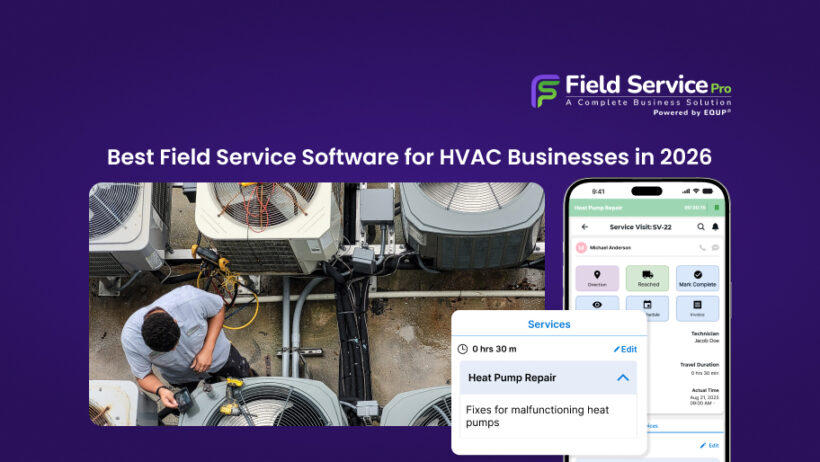
This guide compares the best field service software for HVAC businesses, covering scheduling, dispatch, maintenance contracts, and CRM, so you can choose the right platform for how your operation actually works.
That’s usually when the search begins. The problem is, not every tool built for field teams is built for HVAC businesses. Some platforms handle scheduling well but fall short when it comes to service contracts. Others manage invoices but don’t help with follow-ups or sales proposals. If you’re investing in the best HVAC field service software, it needs to support the way HVAC companies actually operate:
- Emergency calls
- Recurring maintenance
- Technician coordination
- High-value installation quotes
This guide is written for HVAC businesses running 2–30 technicians, residential contractors, commercial teams, and mixed operations, who need a platform that handles the full workflow, not just the calendar.
A reliable field service management system should give you control over your operations without adding complexity. From dispatch to invoicing and customer history to technician updates, good field service software makes daily work simpler, and gives you the visibility to catch problems before they cost you a job or a customer.
If you’re comparing options and wondering which is the best field service management software for HVAC, this guide will help you evaluate what truly matters and what’s just noise. If you’re evaluating options based on specific needs, you can also explore:
- HVAC dispatch software for real-time job coordination
- HVAC scheduling software for managing technician availability
- HVAC service technician software for field execution
- HVAC software for small businesses built for small teams
- HVAC maintenance software for recurring contracts and predictable revenue
What HVAC Businesses Should Expect from Field Service Software in 2026

By now, most HVAC companies understand they need a system. The real question is – what should that system actually do?
The best field service software for HVAC is no longer just a digital calendar. In 2026, HVAC businesses need tools that reduce manual work, improve response time, and help them grow without adding complexity. A strong field service management system should support day-to-day operations and long-term revenue at the same time.
Let’s see what that looks like.
1. Real-Time Scheduling and Dispatch
HVAC work doesn’t follow a predictable schedule. Emergency breakdowns, last-minute cancellations, and urgent commercial calls are part of the job. A reliable field service management system should allow you to:
- Assign and reassign jobs instantly
- View technician availability in real time
- Avoid double bookings
- Prioritize urgent service calls
Real-time dispatching reduces phone calls between the office and field. It keeps technicians productive and customers informed. Companies using real-time dispatch tools report a 30–40% reduction in double-booking incidents and significantly fewer mid-day scheduling conflicts. If your current system can’t adjust quickly during a busy day, it’s already slowing you down. Real-time coordination becomes much easier when your system combines scheduling with dedicated HVAC dispatch software that shows technician availability and location in one view.
2. Mobile Access for Field Technicians (Field Service Management App)
YYour technicians are rarely in the office. That’s why a strong field service management app is essential. Technicians should be able to:
- View job details and customer history
- Update job status on-site
- Upload photos and notes
- Capture signatures
- Generate invoices from the field
Without mobile access, information gets delayed. With it, jobs move faster and paperwork is handled at the point of service. Field technicians using mobile FSM apps save an average of 45–60 minutes per day in administrative tasks, time that goes back into billable work. This is where HVAC service technician software becomes critical, giving your field team access to job details, history, and updates directly from the site.
3. Estimates, Invoicing, and Payments
HVAC businesses handle both small service calls and large installation projects. Your system should support both. The best HVAC field service software should allow you to:
- Create professional estimates quickly
- Convert estimates into jobs without re-entering data
- Send invoices immediately after job completion
- Accept online payments
Faster billing means better cash flow. HVAC businesses that invoice digitally from the field typically see 30–40% faster payment cycles compared to those using paper-based or delayed billing processes. When estimates, invoices, and payments live inside your field service management system, you eliminate duplicate work and reduce delays.
4. CRM and Customer History Tracking
HVAC work is relationship-based. Maintenance contracts, repeat repairs, and seasonal servicing depend on strong customer tracking. A good field service software solution should include built-in CRM capabilities, such as:
- Complete service history
- Equipment details
- Past estimates and invoices
- Notes from previous visits
- Communication records
When technicians and office staff can see full customer history, conversations improve and upsell opportunities become easier. If your business depends on recurring service, strong HVAC maintenance software ensures contracts, reminders, and renewals are handled automatically.
5. Marketing and Follow-Up Automation
Most field service platforms stop at scheduling and invoicing. But HVAC businesses grow through repeat service, maintenance reminders, and timely follow-ups. The best field service management software for HVAC should help you:
- Send automated maintenance reminders
- Follow up on pending estimates
- Promote seasonal services to past customers
Businesses that automate maintenance contract follow-ups report 15–25% higher renewal rates compared to manual outreach. Bringing these capabilities into the same platform, rather than managing a separate marketing tool, reduces the overhead of keeping customer communication consistent.
If a platform only handles dispatch, it’s incomplete. In 2026, HVAC businesses need a field service management system that supports the entire workflow, from the first call to repeat service.
Why Generic Field Service Software Doesn’t Always Work for HVAC Companies

A lot of platforms claim to be “complete” field service solutions. On paper, they look capable. In reality, many of them are built for broad service industries and not for the specific operational needs of HVAC businesses.
That difference matters.
HVAC companies deal with urgent breakdowns, seasonal demand spikes, recurring contracts, and high-value installations. A generic field service management system may handle basic scheduling, but that’s rarely enough.
Let’s help you understand where the gap usually shows.
1. HVAC Jobs Are Not One-Time Tasks
Many service industries operate on one-and-done jobs. HVAC doesn’t. Customers expect seasonal servicing, warranty support, system inspections, and ongoing maintenance as part of a continuing relationship.
If your field service software treats every job as isolated, you lose visibility into repeat opportunities. A proper field service management system for HVAC should track equipment history, service intervals, and past visits, not just job dates. Without that structure, follow-ups depend on memory instead of process.
If you’re managing recurring maintenance contracts, see how purpose-built [HVAC maintenance software] handles long-term service agreements differently from generic platforms.ess.
2. Emergency Service Calls Need Speed
When an air conditioning system fails in peak summer, customers don’t want to wait. They expect fast response and clear communication.
Generic systems often require multiple steps just to reassign a technician or adjust a schedule. That delay directly affects response time and customer satisfaction.
The best field service software for HVAC should allow real-time updates, instant dispatch changes, and clear technician visibility. Emergency calls demand flexibility, if your system slows down decision-making, it becomes a bottleneck instead of a solution.
For a step-by-step look at how HVAC dispatch software handles emergency call prioritisation, job rerouting, and real-time technician assignment, see our complete dispatch guide.
3. Service Contracts and Recurring Maintenance
Recurring maintenance is one of the most stable revenue streams for HVAC companies. Yet many basic platforms don’t handle recurring billing or contract tracking well. A strong field service management setup should allow you to:
- Schedule recurring visits automatically
- Track contract duration and renewal dates
- Send maintenance reminders to customers
- Generate recurring invoices without manual input
When recurring jobs are managed manually or through separate tools, things get missed. Purpose-built field service management software for HVAC simplifies long-term service agreements rather than working around them.
4. Sales Proposals for High-Value Installs
HVAC businesses service equipment and also install it. Installation projects require professional proposals, pricing breakdowns, and timely follow-ups.
Generic job scheduling tools rarely support structured sales processes. There’s often no built-in way to track pending quotes or follow up on large proposals. The best HVAC field service software should help you:
- Create detailed estimates with line-item pricing
- Track proposal status at each stage
- Follow up automatically on pending quotes
- Convert approved proposals into scheduled jobs without re-entering data
When sales, scheduling, and customer tracking live in separate systems, visibility drops. When everything sits inside one field service management system, the entire process becomes clearer and faster.
The Gap Is Even Wider for Commercial HVAC Contractors
The limitations above apply across the board, but they’re amplified for commercial HVAC operations. Managing multi-unit, multi-site service agreements, SLA compliance tracking, and asset-level equipment records requires capabilities that most residential-focused platforms simply don’t offer. The software requirements for a commercial contractor running 40 active maintenance contracts across office buildings are fundamentally different from those of a residential team handling seasonal tune-ups.
Generic tools may work for simple field jobs. HVAC operations are more layered. If your software only manages tasks but doesn’t support contracts, emergencies, and sales, it’s not built for how HVAC businesses actually operate. Smaller teams especially benefit from HVAC software for small businesses that is simple to use and doesn’t require weeks of setup.
Top 10 Features to Look for in the Best HVAC Field Service Software

If you’re comparing options, the features below separate purpose-built HVAC platforms from generic field service tools. Not every system handles all of these well, and the gaps tend to show up at the worst moments.
1. Smart Scheduling & Dispatch
HVAC teams routinely handle urgent repairs, scheduled maintenance, and installation projects on the same day, often with the same technicians. That kind of workload requires a dispatch system that responds in real time, not one that locks you into a fixed schedule you built the night before. Companies using intelligent dispatch tools report a 30–40% reduction in double-booking incidents and meaningfully fewer mid-day scheduling conflicts. The right field service management software for HVAC keeps dispatch flexible without creating confusion in the office.
- View technician availability instantly
- Assign jobs based on skill set or location
- Reassign quickly during emergencies
- Prioritize urgent calls without disrupting the rest of the dayice
2. Technician Mobile App
A Field technicians spend most of their working hours away from the office, which means any system that depends on office-based data entry creates an automatic delay. A practical field service management app closes that gap by putting job information, customer history, and invoicing tools directly in the technician’s hands. Research across field service industries shows that mobile-equipped technicians save an average of 45–60 minutes per day in administrative tasks, time that translates directly into additional billable work.
- Access full job details and equipment history on-site
- Update job status and add notes or photos in real time
- Capture customer signatures digitally
- Generate and send invoices from the field before leaving the job
3. HVAC Service Call Management
Service calls are the backbone of HVAC operations. Your system shouService calls are the backbone of HVAC operations, and the way your software handles them affects everything from response time to customer satisfaction. A strong system does more than log a job; it captures equipment details, records technician notes, stores photos, and tracks job status so the office always knows what’s happening in the field. When service call history is searchable and centralized, repeat visits become faster because the technician arrives with context instead of starting from scratch.
- Capture and categorize service requests from multiple channels
- Store equipment details, model numbers, and warranty status per job
- Track real-time job status across the entire team
- Attach photos, notes, and documents directly to the job record
4. Recurring Maintenance Tracking
Recurring maintenance contracts represent some of the most predictable revenue an HVAC business can generate, but they’re only reliable if your software actually supports them. Many basic platforms require manual scheduling of recurring visits, which means renewals and reminders get missed as the business grows. HVAC businesses that automate maintenance follow-ups report 15–25% higher contract renewal rates compared to those relying on manual outreach. A purpose-built system handles the entire recurring workflow without additional administrative effort.
- Schedule recurring visits automatically based on contract terms
- Send maintenance reminders to customers before visits are due
- Track contract start dates, renewal dates, and coverage scope
- Generate recurring invoices on schedule without manual input
5. Sales Proposal & Estimate Builder
HVAC installations and system replacements are high-value sales that require professional documentation, not handwritten quotes or generic PDFs. A good field service management system should support the full proposal process, from building a detailed estimate to tracking its status and automatically following up on pending decisions. When sales and operations live in the same platform, approved quotes convert into scheduled jobs without any re-entry of information, which removes a common source of error and delay.
- Build detailed, itemized estimates quickly using saved line items
- Track open proposals and their current status
- Follow up automatically on quotes that haven’t received a response
- Convert approved proposals into scheduled jobs in one step
6. Flat-Rate Pricing and Price Book
Without a centralized price book, technicians in the field often quote jobs differently — sometimes underpricing, sometimes creating inconsistency that erodes customer trust. Flat-rate pricing solves this by giving every technician access to pre-approved pricing for common HVAC jobs, parts, and service tiers. This speeds up the quoting process significantly and removes the back-and-forth between the field and the office on pricing approvals. Businesses that standardize field pricing through a built-in price book report faster quote turnaround and fewer pricing disputes after job completion.
- Maintain a centralized library of services, parts, and standard prices
- Give technicians access to approved pricing without office approval
- Ensure consistent quotes across all technicians and job types
- Update pricing across all active quotes from a single location
7. Parts and Inventory Tracking
One of the most overlooked costs in HVAC operations is the unplanned return trip, driving back to the supply house because the right part wasn’t on the truck. Each of those trips costs an estimated $150–$300 in labor, fuel, and lost billable time. Inventory tracking built into your field service management system gives dispatchers visibility into what each technician is carrying before a job is assigned, reducing parts-related delays and unnecessary trips. Over time, better parts visibility also improves purchasing decisions and reduces overstock.
- Track parts and materials at the technician or vehicle level
- Check parts availability before dispatching a technician to a job
- Receive alerts when stock falls below minimum thresholds
- Link parts usage directly to job records for accurate cost tracking
8. GPS Tracking and Route Optimization
Fuel costs, drive time, and scheduling inefficiencies add up quickly across a team of technicians spread across a service area. GPS tracking gives dispatchers a live view of where every technician is, which makes reassigning jobs during the day far more accurate than working from memory or phone calls. Route optimization on top of that reduces unnecessary mileage, HVAC teams using optimized routing typically save 2–3 hours of drive time per technician per week, which across a team of five represents a significant recovery of billable capacity.
- View real-time technician locations directly from the dispatch screen
- Optimize daily routes to reduce drive time and fuel costs
- Reassign jobs to the nearest available technician during emergencies
- Review historical location data for accountability and payroll verification
9. CRM Built into the System
CuCustomer relationships drive repeat business in HVAC, and that relationship depends entirely on having the right information available when it matters. A built-in CRM means your office staff and technicians see the same customer history, past service calls, equipment records, previous estimates, and communication logs without switching between tools. When that context is available at the point of service, upsell conversations happen naturally rather than feeling like a sales pitch.
- Access complete service history and equipment records per customer
- Store communication logs alongside job and invoice history
- View past estimates and payment records in a single profile
- Flag high-value customers or those approaching maintenance renewals
10. Marketing and Follow-Up & Automation
Most field service platforms stop at job management. But HVAC businesses grow through repeat service, timely follow-ups, and staying visible between visits and doing that manually doesn’t scale. Built-in automation tools handle the routine communication that otherwise falls through the cracks, from maintenance reminders to seasonal campaign messages to review requests after completed jobs.
- Send automated maintenance reminders before service intervals are due
- Follow up automatically on pending estimates that haven’t been accepted
- Request reviews from customers after job completion
- Promote seasonal services to your existing customer base
Best Field Service Management Software for HVAC Businesses in 2026
There’s no shortage of tools claiming to be the best field service software for HVAC. But not every platform is built with the same priorities. Some focus only on scheduling. Others are built for enterprise-level teams and come with complexity and high costs.
Below is a practical comparison of leading options so you can decide which field service management system fits your HVAC business best.

1. FieldServicePro – All-in-One Field Service Management System for HVAC
FieldServicePro is designed for HVAC businesses that want more than job scheduling. It combines operations, sales, CRM, and automation inside a single dashboard. There’s no need to connect multiple tools or rely on third-party integrations. Everything works together from day one.
For HVAC companies managing service calls, recurring maintenance, and installation proposals, this structure makes a real difference. Instead of switching between systems, you manage your entire workflow in one place.
Key Features:
- Smart scheduling and real-time dispatch
- Built-in CRM with full customer history
- Recurring maintenance and contract tracking
- Sales proposal and estimate builder
- Marketing and follow-up automation
- Technician mobile app
- Invoicing and online payments
- Single dashboard with no integrations required
- Easy setup with no technical learning curve
If you’re looking for HVAC service software that supports both operations and growth, FieldServicePro stands out because it connects job management with customer management and revenue tools, apart from job scheduling.
2. ServiceTitan
ServiceTitan is a well-known platform in the HVAC space, especially among large or enterprise-level companies. It offers deep functionality and advanced reporting, but it can be expensive and complex for smaller teams.
It’s often suited for companies with larger budgets and dedicated administrative staff.
Key Features:
- Advanced scheduling and dispatch
- Detailed reporting and analytics
- Sales tracking tools
- Technician mobile access
- Integration ecosystem
While powerful, smaller HVAC businesses may find it heavy in terms of setup and cost.
3. Housecall Pro
Housecall Pro is popular among small to mid-sized service businesses. It focuses on ease of use and core field service tools. It works well for job scheduling and invoicing but may require additional tools for marketing automation or advanced CRM needs.
Key Features:
- Online booking
- Scheduling and dispatch
- Invoicing and payments
- Basic automation
- Mobile app for technicians
It’s practical for straightforward operations, but growing HVAC businesses may need more built-in sales and marketing capabilities.
4. FieldEdge
FieldEdge is another HVAC-focused platform that offers solid dispatch and accounting integrations. It integrates closely with QuickBooks and supports technician tracking.
However, much of its strength depends on integrations rather than a unified built-in system.
Key Features:
- Scheduling and dispatch
- QuickBooks integration
- Service agreement tracking
- Customer history
- Reporting tools
It can work well for businesses already invested in accounting systems but may require additional tools for marketing and automation.
5. Service Fusion
Service Fusion is often considered a mid-tier field service solution. It offers core functionality but may lack deeper automation or growth tools inside the system itself.
Key Features:
- Job scheduling
- Estimates and invoicing
- Customer management
- Basic reporting
- Dispatch management
It supports daily operations but doesn’t strongly combine CRM, marketing, and automation inside one unified dashboard.
Comparison Table: HVAC Field Service Software (2026)
| Feature / Platform | FieldServicePro | ServiceTitan | Housecall Pro | FieldEdge | Service Fusion |
|---|---|---|---|---|---|
| Smart Scheduling & Dispatch | ✅ | ✅ | ✅ | ✅ | ✅ |
| Built-in CRM | ✅ Advanced | ✅ | ⚠️ Basic | ✅ | ⚠️ Basic |
| Recurring Maintenance | ✅ | ✅ | ⚠️ Limited | ✅ | ⚠️ Limited |
| Sales Proposal Tracking | ✅ | ✅ | ⚠️ Basic | ⚠️ Limited | ⚠️ Basic |
| Marketing & Automation | ✅ Built-in | ⚠️ Add-ons | ⚠️ Limited | ❌ | ❌ |
| Technician Mobile App | ✅ | ✅ | ✅ | ✅ | ✅ |
| Single Dashboard (No Integrations Needed) | ✅ | ❌ | ❌ | ❌ | ❌ |
| Suitable for Small HVAC Businesses | ✅ | ⚠️ Expensive | ✅ | ⚠️ Depends | ✅ |
| Suitable for Scaling Teams | ✅ | ✅ | ⚠️ | ⚠️ | ⚠️ |
When choosing the best HVAC field service software, the real difference is in how well the system connects dispatch, CRM, sales proposals, recurring maintenance, and automation inside one field service management system.
If you want a platform that manages jobs and supports long-term growth without complexity, FieldServicePro offers a more unified approach compared to tools that rely heavily on integrations or enterprise-level setups.
Frequently Asked Questions (FAQs)
The best field service software for HVAC helps you manage scheduling, dispatch, service calls, estimates, invoicing, and customer history in one place. An all-in-one system like FieldServicePro stands out because it combines job management, CRM, and automation without requiring multiple tools.
Yes, HVAC businesses rely on repeat service, maintenance contracts, and follow-ups. A built-in CRM helps track customer history, equipment details, past jobs, and open estimates so nothing gets missed.
Yes, most modern field service platforms include a mobile app. A field service management app allows HVAC technicians to view jobs, update status, add notes, and generate invoices directly from the field.
HVAC field service software pricing varies by features and team size. Basic tools cost less but may require add-ons. All-in-one platforms may cost more upfront but save money long-term by replacing multiple systems.
Final Verdict!
There isn’t a single answer that fits every HVAC company. The right choice depends on where your business stands today and where you want it to go.
If you only need basic job scheduling and invoicing, simpler field service tools may be enough. They handle dispatch and payments adequately, but offer little beyond daily operations, which means you’ll likely outgrow them as your team and contract base expands.
If you run a larger HVAC company with multiple departments, enterprise-heavy platforms can provide deep reporting and advanced workflows, though they typically come with higher costs, longer onboarding, and complexity that smaller teams don’t need.
If you’re a growing HVAC business that wants more than scheduling, the decision changes. You need a complete field service management system that connects dispatch, CRM, recurring maintenance, estimates, billing, and customer follow-ups in one place. Piecing that together from separate tools creates gaps, in visibility, in communication, and in the customer experience. That’s why the best field service software for HVAC is the one that handles both daily dispatch and long-term contract management in a single system your team will actually use.
FieldServicePro – Built for HVAC Teams That Are Ready to Grow
FieldServicePro combines scheduling, dispatch, maintenance contracts, CRM, estimates, invoicing, and customer follow-up automation inside a single dashboard without complicated integrations or enterprise-level pricing.
- Scheduling and dispatch – real-time technician visibility and instant job reassignment
- Recurring maintenance – automated scheduling, reminders, and contract tracking
- Estimates and invoicing – create quotes, convert to jobs, and collect payments in one workflow
- Built-in CRM – full customer and equipment history accessible from the office or the field
- Marketing automation – maintenance reminders, follow-up sequences, and seasonal promotions
Thousands of HVAC businesses use FieldServicePro to reduce manual work, improve response times, and build more predictable revenue from their existing customer base. If you’re looking for a system that brings dispatch, scheduling, technician workflows, and maintenance contracts together in one place, explore how modern HVAC service software works in real operations.