





If you run a service business, you’ve probably had days where everything feels slightly out of control.
A technician calls asking for an address. A customer wants an update. Someone forgot to send an invoice. You’re checking a spreadsheet while answering calls and trying to remember who needs a follow-up.
That’s usually the moment people start asking, “Do I need a proper system for this?”
That system is called Field Service Management.
In simple terms, Field Service Management is how you organize and manage work that happens outside your office, like scheduling jobs, dispatching technicians, tracking customer history, handling invoices, and keeping everything moving without constant back-and-forth calls.
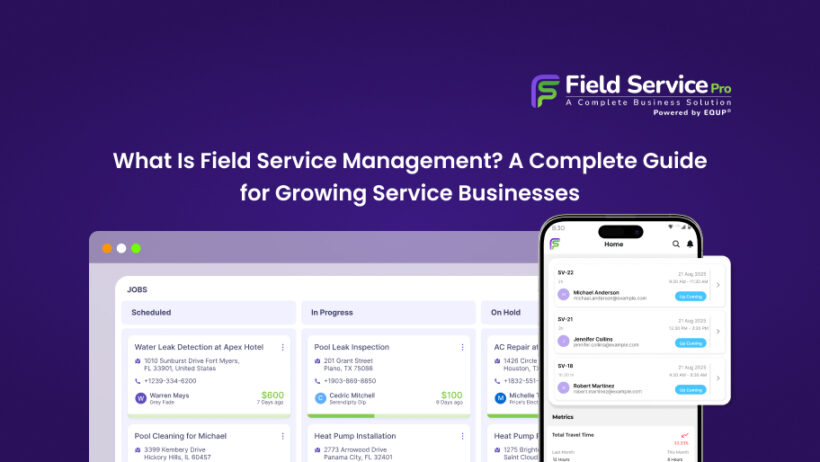
Instead of juggling spreadsheets, paper notes, and separate apps, businesses use a field service management system to bring it all into one place. This software can help your technicians update jobs directly from the field without calling in every time.
If your business is growing, this isn’t about adding more tools. It’s about adding structure. In this guide, we’ll break down what it really means, how it works, and how the right field service software can support your next stage of growth.
What Is Field Service Management?

Field Service Management is the way a service business organizes and controls work that happens outside the office.
If you send technicians to customer locations, whether for HVAC, plumbing, cleaning, electrical, or repairs, you’re already doing field service management. The question is whether you’re doing it in a structured way or managing it as things come up.
At its core, field service management includes:
- Coordinating field operations
- Scheduling jobs
- Dispatching technicians
- Communicating with customers
- Sending estimates and invoices
When these tasks are handled manually through calls, texts, spreadsheets, or paper, things can quickly become disorganized. That’s why many growing businesses move to a field service management system.
A proper system brings all of these moving parts into one place. You can see which jobs are scheduled, which technician is assigned, what the customer history looks like, and whether an invoice has been sent without switching between tools.
In short, field service management is all about creating a reliable system that keeps your operations smooth as your business grows.
What Does a Field Service Management System Include?

Modern service businesses don’t rely on spreadsheets anymore. They use structured field service software that brings operations, customers, and revenue into one organized workflow. Below we’ve discussed what a complete system typically covers.
Job Scheduling and Dispatch
Scheduling is the backbone of field operations. A good field service management system lets you:
- Schedule jobs quickly
- Assign the right technician
- Avoid double bookings
- Reschedule without confusion
Dispatching becomes clearer because you can see technician availability and workload in real time. Instead of juggling calls and spreadsheets, everything is visible in one dashboard.
Work Order Management
Every job needs details and not just a date and time. Work order management allows you to:
- Store job descriptions
- Add notes and instructions
- Attach photos or documents
- Track job status from open to completed
With proper field service software, work orders don’t get lost in email threads. They’re structured and easy to follow.
Technician Tracking
As your team grows, visibility becomes important. A reliable field service system helps you:
- Track which technician is assigned to which job
- Monitor job progress
- Update statuses in real time
- Reduce back-and-forth calls
Some systems also include a field service app, which allows technicians to update tasks directly from the field.
Customer Relationship Management (CRM)
Field businesses depend on repeat customers and long-term relationships. Built-in CRM features inside field service software allow you to:
- Store full customer history
- Track past services and equipment
- Record communication notes
- View invoices and payments in one place
Instead of searching through old messages or files, customer information stays organized.

Estimates, Invoicing, and Payments
Cash flow matters. A complete field service management system connects job completion with billing. This includes:
- Creating professional estimates
- Converting estimates into jobs
- Generating invoices instantly
- Accepting online payments
When estimates, jobs, and invoices are connected inside one system, billing becomes faster and more accurate.
Reporting and Performance Tracking
As your business grows, you need visibility beyond daily tasks. Modern field service software provides reporting tools that help you:
- Track revenue
- Monitor technician performance
- Analyze job completion rates
- Identify busy seasons or service trends
Spreadsheets can show numbers. A structured field service management system shows patterns and performance clearly.
Today’s service businesses need a complete field service management system rather than a calendar. They need a field service software that connects scheduling, work orders, CRM, billing, and reporting, all inside one reliable platform.
Why Small Businesses Need Field Service Management

When you’re small, you can manage operations in your head. When you start growing, that stops working. Increasing jobs. More technicians. Growing customers. Constant follow-ups.Without structure, growth creates confusion.
This is where Field Service Management becomes less of an option and more of a necessity. A proper field service management system organizes work and protects your revenue and reputation. Let’s find out how!
Reduces Missed Jobs and Double Bookings
Missed appointments cost money. Double bookings damage trust. When schedules are handled through calls, texts, or spreadsheets, mistakes are almost guaranteed. A structured field service software setup gives you:
- A clear job calendar
- Technician availability in one view
- Real-time updates
- Fewer manual errors
You stop reacting to problems and start preventing them.
Improves Technician Productivity
Technicians lose time when they:
- Call the office for job details
- Wait for address confirmations
- Don’t have customer history
- Receive incomplete instructions
With a proper field service management system, technicians get everything they need before arriving on-site. If paired with a mobile app, updates happen instantly from the field. Less confusion means more completed jobs per day.
Speeds Up Invoicing and Cash Flow
Delayed invoicing delays cash. When job completion and billing are disconnected, invoices get pushed to the end of the week or worse, the end of the month. Modern field service management connects jobs directly to estimates and invoices. Once work is done, billing can happen immediately. Faster invoicing means healthier cash flow.
Enhances Customer Experience
Customers notice organization. They notice when:
- Technicians arrive on time
- Service history is remembered
- Estimates are clear
- Follow-ups happen without reminders
A reliable field service management system helps you deliver consistency. And consistency builds trust.
Supports Business Growth
Growth without systems creates stress. Growth with structure creates opportunity. With the right field service software, you can:
- Add more technicians
- Handle more service calls
- Track performance clearly
- Build recurring revenue
Instead of feeling overwhelmed as you grow, you gain visibility and control.
Field Service Management vs Spreadsheets: What’s the Difference?
Many service businesses don’t switch to a field service system because spreadsheets stop working. They switch because spreadsheets stop scaling.
At first, spreadsheets feel simple. You list jobs, assign technicians, maybe track payments. But as jobs increase, so do errors, confusion, and delays.
Let’s break down the real difference.
| Area | Spreadsheets & Manual Tools | Field Service System |
|---|---|---|
| Job Scheduling | Manual entry, error-prone | Structured scheduling with real-time updates |
| Dispatching | Calls and messages | Centralized dispatch dashboard |
| Work Orders | Notes scattered across tools | Organized digital work orders |
| Customer History | Stored in separate files | Built-in CRM with full service history |
| Invoicing | Created separately, often delayed | Connected directly to completed jobs |
| Recurring Maintenance | Tracked manually | Automated scheduling and reminders |
| Reporting | Manual calculations | Automated performance reports |
| Visibility | Limited, depends on updates | Real-time operational view |
| Scalability | Difficult as jobs increase | Designed for growth |
As a service business grows, spreadsheets don’t fail immediately; instead, they fail gradually. A proper Field Service setup replaces manual tracking with a structured, scalable system that supports long-term growth.
Who Needs Field Service Management Software?
If your business sends people into the field to serve customers, you likely need a system.
Field Service Management software is useful for growing teams that are starting to feel operational pressure, like missed updates, scheduling confusion, delayed invoices, or difficulty tracking customer history. Below is the list of companies that will benefit from field service management:
HVAC Companies:
HVAC businesses deal with emergency calls, seasonal demand, recurring maintenance, and installation projects. Without structure, it’s easy to lose track of service history or follow-ups. A reliable system keeps dispatch, contracts, and customer records organized.
Plumbing Businesses:
Plumbing companies handle urgent calls daily. Fast scheduling, clear job details, and quick invoicing are critical. A centralized system ensures technicians get accurate information and payments aren’t delayed.
Electrical Contractors:
Electrical jobs often require detailed work orders and documentation. A structured field service management system helps track projects, manage teams, and maintain safety records.
Cleaning Services:
Cleaning businesses operate on recurring schedules and multiple locations. Managing repeat contracts, rescheduling, and staff assignments becomes much easier with dedicated field service software for small businesses.
Lawn Care Companies:
Lawn care businesses rely heavily on recurring services. Seasonal planning, route optimization, and automatic reminders help maintain steady revenue without manual tracking.
Appliance Repair Services:
Appliance repair teams need quick dispatch, access to service history, and equipment details. A centralized system improves response time and reduces repeat visits caused by missing information.
Roofing Contractors:
Roofing projects can be large and detailed, requiring clear estimates, follow-ups, and job tracking. A structured system helps manage both short-term repairs and long-term projects efficiently.
The field service management for service companies is valuable for any business that:
- Schedules technicians
- Sends teams to customer locations
- Manages recurring work
- Handles estimates and invoices
- Wants better visibility as it grows
If you’re running operations through spreadsheets and calls, you may not feel the gap yet. But as your team expands and job volume increases, dedicated field service software for small businesses becomes less of a luxury and more of a requirement.
Final Thoughts!
If you’re a solo operator handling a small number of jobs each week, basic tools might still work. A simple calendar, invoicing app, or spreadsheet may be enough for now. When job volume is manageable and communication is direct, complexity stays low.
But once you start growing, things change.
New technicians. Extra service calls. More repeat customers. Increased invoices. Complex moving parts.
That’s when a structured Field Service Management approach becomes essential. A proper field service system gives you visibility over your operations. You can see what’s scheduled, what’s completed, what’s pending, and what needs attention without relying on memory or scattered tools.
In the long term, the value isn’t just operational clarity, but also efficiency and revenue control.
- Fewer missed jobs
- Faster invoicing
- Better technician productivity
- Stronger customer follow-ups
- Clear performance tracking
Over time, these improvements compound.
Modern field service software is the right system that simplifies your workflow by bringing scheduling, customer management, billing, reporting, and even transparent field service pricing management into one place.
If your goal is to stay small and steady, basic tools may hold up. If your goal is to scale with confidence, a unified platform designed for service businesses makes that growth smoother and more predictable.