




Most HVAC owners don’t start looking for new software because they want it. They start looking because something isn’t working.
Jobs are getting double-booked. Technicians keep calling the office for updates. Estimates sit in inboxes too long. Maintenance reminders are missed. And by the end of the month, it’s hard to clearly see what’s pending, what’s paid, and what’s slipping away.
That’s usually when the search for the best field service software for HVAC begins.
The problem is, not every tool built for field teams is built for HVAC businesses. Some platforms handle scheduling well but fall short when it comes to service contracts. Others manage invoices but don’t help with follow-ups or sales proposals. If you’re investing in the best HVAC field service software, it needs to support the way HVAC companies actually operate:
- Emergency calls
- Recurring maintenance
- Technician coordination
- High-value installation quotes
A reliable field service management system should give you control over your operations without adding complexity. From dispatch to invoicing, from customer history to technician updates, good field service software should make daily work simpler, not heavier.
If you’re comparing options and wondering which is the best field service management software for HVAC, this guide will help you evaluate what truly matters and what’s just noise.
What HVAC Businesses Should Expect from Field Service Software in 2026

By now, most HVAC companies understand they need a system. The real question is – what should that system actually do?
The best field service software for HVAC is no longer just a digital calendar. In 2026, HVAC businesses need tools that reduce manual work, improve response time, and help them grow without adding complexity. A strong field service management system should support day-to-day operations and long-term revenue at the same time.
Let’s see what that looks like.
Real-Time Scheduling and Dispatch
HVAC work doesn’t follow a predictable schedule. Emergency breakdowns, last-minute cancellations, and urgent commercial calls are part of the job. A reliable field service management system should allow you to:
- Assign and reassign jobs instantly
- View technician availability in real time
- Avoid double bookings
- Prioritize urgent service calls
Real-time dispatching reduces phone calls between the office and field. It keeps technicians productive and customers informed. If your current system can’t adjust quickly during a busy day, it’s already slowing you down.
Mobile Access for Field Technicians (Field Service Management App)
Your technicians are rarely in the office. That’s why a strong field service management app is essential. Technicians should be able to:
- View job details and customer history
- Update job status on-site
- Upload photos and notes
- Capture signatures
- Generate invoices from the field
Without mobile access, information gets delayed. With it, jobs move faster, paperwork reduces, and billing becomes smoother. The right field service software keeps the entire team connected without constant calls back to the office.
Estimates, Invoicing, and Payments
HVAC businesses handle both small service calls and large installation projects. Your system should support both. The best HVAC field service software should allow you to:
- Create professional estimates quickly
- Convert estimates into jobs without re-entering data
- Send invoices immediately after job completion
- Accept online payments
Faster billing means better cash flow. When estimates, invoices, and payments live inside your field service management system, you eliminate duplicate work and reduce delays.
CRM and Customer History Tracking
HVAC work is relationship-based. Maintenance contracts, repeat repairs, and seasonal servicing depend on strong customer tracking. A good field service software solution should include built-in CRM capabilities, such as:
- Complete service history
- Equipment details
- Past estimates and invoices
- Notes from previous visits
- Communication records
When technicians and office staff can see full customer history, conversations improve and upsell opportunities become easier.
Marketing and Follow-Up Automation
This is where many tools fall short. Most field service platforms stop at scheduling and invoicing. But HVAC businesses grow through repeat service, maintenance reminders, and timely follow-ups. The best field service management software for HVAC should help you:
- Send automated maintenance reminders
- Follow up on pending estimates
- Nurture past customers
- Promote seasonal services
Instead of juggling separate tools, modern field service management should bring operations, sales, and customer communication into one place. That’s what helps HVAC companies move from simply managing jobs to building predictable revenue.
If a platform only handles dispatch, it’s incomplete. In 2026, HVAC businesses need a field service management system that supports the entire workflow, from the first call to repeat service.
Why Generic Field Service Software Doesn’t Always Work for HVAC Companies

A lot of platforms claim to be “complete” field service solutions. On paper, they look capable. In reality, many of them are built for broad service industries and not for the specific operational needs of HVAC businesses.
That difference matters.
HVAC companies deal with urgent breakdowns, seasonal demand spikes, recurring contracts, and high-value installations. A generic field service management system may handle basic scheduling, but that’s rarely enough.
Let’s help you understand where the gap usually shows.
HVAC Jobs Are Not One-Time Tasks
Many service industries operate on one-and-done jobs. HVAC doesn’t. Customers expect:
- Seasonal servicing
- Warranty support
- System inspections
- Ongoing maintenance
If your field service software treats every job as isolated, you lose visibility into repeat opportunities. A proper field service management system for HVAC should track equipment history, service intervals, and past visits, not just job dates. Without that structure, follow-ups depend on memory instead of process.
Emergency Service Calls Need Speed
When an air conditioning system fails in peak summer, customers don’t want to wait. They expect fast response and clear communication.
Generic systems often require multiple steps just to reassign a technician or adjust a schedule. That delay affects response time.
The best field service software for HVAC should allow real-time updates, instant dispatch changes, and clear technician visibility. Emergency calls demand flexibility. If your system slows down decision-making, it becomes a bottleneck instead of a solution.
Service Contracts and Recurring Maintenance
Recurring maintenance is one of the most stable revenue streams for HVAC companies. Yet many basic platforms don’t handle recurring billing or contract tracking well. A strong field service management setup should allow you to:
- Schedule recurring visits automatically
- Track contract duration
- Send maintenance reminders
- Generate recurring invoices
When recurring jobs are managed manually or through separate tools, things get missed. A true best field service management software for HVAC should simplify long-term service agreements, not complicate them.
Sales Proposals for High-Value Installs
HVAC businesses don’t just involve repairing, but installation as well. And installation projects require professional proposals, pricing breakdowns, and timely follow-ups.
Generic job scheduling tools rarely support structured sales processes. There’s often no built-in way to track pending quotes or follow up on large proposals. The best HVAC field service software should help you:
- Create detailed estimates
- Track proposal status
- Follow up automatically
- Convert approved quotes into scheduled jobs
When sales, scheduling, and customer tracking live in separate systems, visibility drops. When everything sits inside one field service management system, the entire process becomes clearer and faster.
Generic tools may work for simple field jobs. HVAC operations are more layered. If your software only manages tasks but doesn’t support contracts, emergencies, and sales, it’s not built for how HVAC businesses actually operate.
7 Features to Look for in the Best HVAC Field Service Software

If you’re comparing options, below we’ve discussed some features that truly matter in a modern field service management system.
Smart Scheduling & Dispatch
HVAC teams deal with urgent repairs, scheduled maintenance, and installation projects, often all on the same day. Smart scheduling should allow you to:
- View technician availability instantly
- Assign jobs based on skill or location
- Reassign quickly during emergencies
- Avoid double bookings
The right field service management software for HVAC keeps dispatch flexible without creating confusion in the office.
HVAC Service Call Management
Service calls are the backbone of HVAC operations. Your system should help you manage them efficiently from start to finish. Look for software that can:
- Capture service requests easily
- Store job details and equipment information
- Track job status in real time
- Record notes and photos
Strong service call management ensures nothing gets missed and every visit is documented inside your field service software.
Technician Mobile App
A practical field service management app is essential for field teams. Technicians should be able to:
- Access job details instantly
- Update job progress
- Add notes and images
- Generate invoices from the field
Without mobile access, teams rely on calls and manual updates. With it, operations run smoother and billing becomes faster.
Recurring Maintenance Tracking
Recurring maintenance contracts are predictable revenue for HVAC companies. Your software should make them easy to manage. The best HVAC field service software should support:
- Automatic scheduling of recurring visits
- Maintenance reminders
- Contract tracking
- Recurring invoicing
If recurring work requires manual tracking, growth becomes harder to manage.
Sales Proposal & Estimate Builder
HVAC installations and system upgrades require professional proposals. A good field service management system should allow you to:
- Create detailed estimates quickly
- Track open proposals
- Convert approved quotes into jobs
- Follow up automatically on pending quotes
Sales and operations shouldn’t live in separate tools. Keeping them connected improves visibility and closing rates.
CRM Built into the System
Customer history matters in HVAC. Your field service software should include built-in CRM features such as:
- Complete service history
- Equipment records
- Communication logs
- Past invoices and payments
When customer information is centralized, your team works with context and not with guesswork.
Marketing & Automation Tools
This is where many platforms fall short. The best field service management software for HVAC should help you grow, not just manage jobs. That means built-in tools for:
- Maintenance reminders
- Follow-up emails
- Review requests
- Seasonal service promotions
When scheduling, CRM, and automation work together inside one field service management system, you move beyond job tracking into complete business management.
Best Field Service Management Software for HVAC Businesses in 2026
There’s no shortage of tools claiming to be the best field service software for HVAC. But not every platform is built with the same priorities. Some focus only on scheduling. Others are built for enterprise-level teams and come with complexity and high costs.
Below is a practical comparison of leading options so you can decide which field service management system fits your HVAC business best.

FieldServicePro – All-in-One Field Service Management System for HVAC
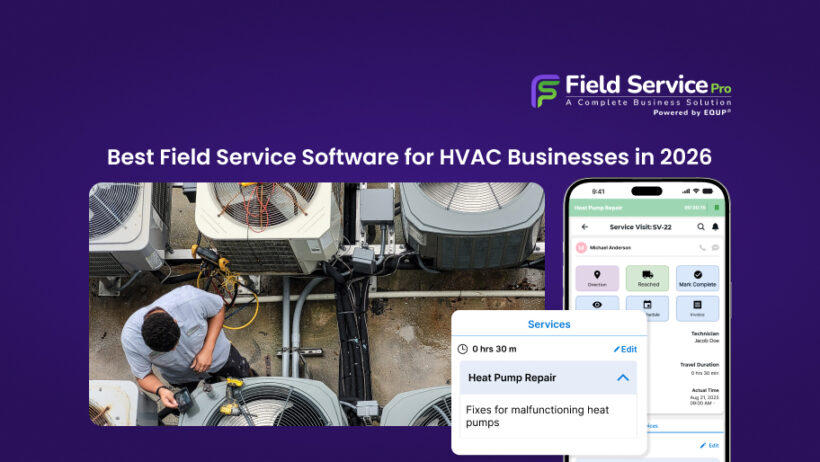
FieldServicePro is designed for HVAC businesses that want more than job scheduling. It combines operations, sales, CRM, and automation inside a single dashboard. There’s no need to connect multiple tools or rely on third-party integrations. Everything works together from day one.
For HVAC companies managing service calls, recurring maintenance, and installation proposals, this structure makes a real difference. Instead of switching between systems, you manage your entire workflow in one place.
Key Features:
- Smart scheduling and real-time dispatch
- Built-in CRM with full customer history
- Recurring maintenance and contract tracking
- Sales proposal and estimate builder
- Marketing and follow-up automation
- Technician mobile app
- Invoicing and online payments
- Single dashboard with no integrations required
- Easy setup with no technical learning curve
If you’re looking for HVAC service software that supports both operations and growth, FieldServicePro stands out because it connects job management with customer management and revenue tools, apart from job scheduling.
ServiceTitan
ServiceTitan is a well-known platform in the HVAC space, especially among large or enterprise-level companies. It offers deep functionality and advanced reporting, but it can be expensive and complex for smaller teams.
It’s often suited for companies with larger budgets and dedicated administrative staff.
Key Features:
- Advanced scheduling and dispatch
- Detailed reporting and analytics
- Sales tracking tools
- Technician mobile access
- Integration ecosystem
While powerful, smaller HVAC businesses may find it heavy in terms of setup and cost.
Housecall Pro
Housecall Pro is popular among small to mid-sized service businesses. It focuses on ease of use and core field service tools. It works well for job scheduling and invoicing but may require additional tools for marketing automation or advanced CRM needs.
Key Features:
- Online booking
- Scheduling and dispatch
- Invoicing and payments
- Basic automation
- Mobile app for technicians
It’s practical for straightforward operations, but growing HVAC businesses may need more built-in sales and marketing capabilities.
FieldEdge
FieldEdge is another HVAC-focused platform that offers solid dispatch and accounting integrations. It integrates closely with QuickBooks and supports technician tracking.
However, much of its strength depends on integrations rather than a unified built-in system.
Key Features:
- Scheduling and dispatch
- QuickBooks integration
- Service agreement tracking
- Customer history
- Reporting tools
It can work well for businesses already invested in accounting systems but may require additional tools for marketing and automation.
Service Fusion
Service Fusion is often considered a mid-tier field service solution. It offers core functionality but may lack deeper automation or growth tools inside the system itself.
Key Features:
- Job scheduling
- Estimates and invoicing
- Customer management
- Basic reporting
- Dispatch management
It supports daily operations but doesn’t strongly combine CRM, marketing, and automation inside one unified dashboard.
Comparison Table: HVAC Field Service Software (2026)
| Feature / Platform | FieldServicePro | ServiceTitan | Housecall Pro | FieldEdge | Service Fusion |
|---|---|---|---|---|---|
| Smart Scheduling & Dispatch | ✅ | ✅ | ✅ | ✅ | ✅ |
| Built-in CRM | ✅ Advanced | ✅ | ⚠️ Basic | ✅ | ⚠️ Basic |
| Recurring Maintenance | ✅ | ✅ | ⚠️ Limited | ✅ | ⚠️ Limited |
| Sales Proposal Tracking | ✅ | ✅ | ⚠️ Basic | ⚠️ Limited | ⚠️ Basic |
| Marketing & Automation | ✅ Built-in | ⚠️ Add-ons | ⚠️ Limited | ❌ | ❌ |
| Technician Mobile App | ✅ | ✅ | ✅ | ✅ | ✅ |
| Single Dashboard (No Integrations Needed) | ✅ | ❌ | ❌ | ❌ | ❌ |
| Suitable for Small HVAC Businesses | ✅ | ⚠️ Expensive | ✅ | ⚠️ Depends | ✅ |
| Suitable for Scaling Teams | ✅ | ✅ | ⚠️ | ⚠️ | ⚠️ |
When choosing the best HVAC field service software, the real difference is in how well the system connects dispatch, CRM, sales proposals, recurring maintenance, and automation inside one field service management system.
If you want a platform that manages jobs and supports long-term growth without complexity, FieldServicePro offers a more unified approach compared to tools that rely heavily on integrations or enterprise-level setups.
Frequently Asked Questions (FAQs)
- What is the best field service software for HVAC?
The best field service software for HVAC helps you manage scheduling, dispatch, service calls, estimates, invoicing, and customer history in one place. An all-in-one system like FieldServicePro stands out because it combines job management, CRM, and automation without requiring multiple tools.
- Do HVAC companies need CRM software?
Yes, HVAC businesses rely on repeat service, maintenance contracts, and follow-ups. A built-in CRM helps track customer history, equipment details, past jobs, and open estimates so nothing gets missed.
- Is there a field service management app for HVAC technicians?
Yes, most modern field service platforms include a mobile app. A field service management app allows HVAC technicians to view jobs, update status, add notes, and generate invoices directly from the field.
- How much does HVAC field service software cost?
HVAC field service software pricing varies by features and team size. Basic tools cost less but may require add-ons. All-in-one platforms may cost more upfront but save money long-term by replacing multiple systems.
Final Verdict!
There isn’t a single answer that fits every HVAC company. The right choice depends on where your business stands today and where you want it to go.
- If you only need basic job scheduling and invoicing, simpler field service tools may be enough. They handle dispatch and payments well, but may not offer much beyond daily operations.
- If you run an HVAC company with multiple departments, enterprise-heavy platforms can provide deep reporting and advanced workflows, though they often come with higher costs and complexity.
- If you’re a growing HVAC business that wants more than scheduling, the decision changes. You need a complete field service management system that connects dispatch, CRM, recurring maintenance, estimates, billing, and customer follow-ups in one place.
That’s where FieldServicePro stands out. It combines operations, sales, automation, and streamlined field service pricing management inside a single dashboard without relying on multiple integrations or complicated setups. Instead of managing tools, you manage your business.